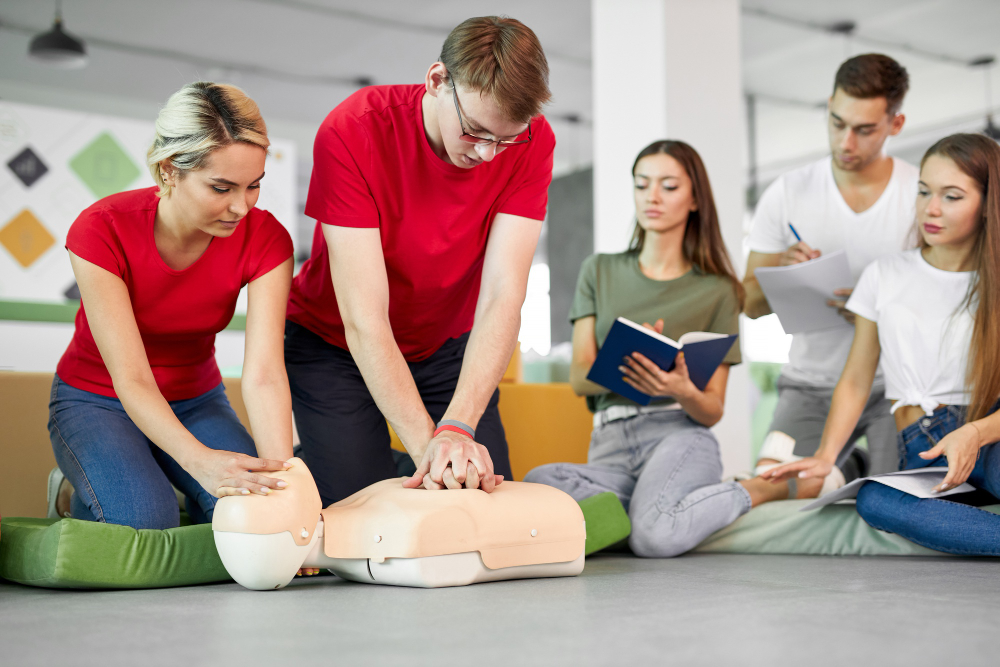
Emergencies can happen anytime, anywhere — in schools, homes, offices, or while jogging in the park. When a person suddenly collapses due to cardiac arrest, knowing the proper steps to take can mean the difference between life and death. Two of the most potent tools in emergency response are CPR (Cardiopulmonary Resuscitation) and AED (Automated External Defibrillator).
While often used together, CPR and AED serve different but equally vital roles in the chain of survival. This blog discusses the differences between CPR and AED, how they work together, and why First Aid, CPR, and AED training in Washington is essential for everyone in 2025.
What is CPR?
CPR, or Cardiopulmonary Resuscitation, is a manual life-saving technique that helps maintain blood flow to the brain and heart in someone whose heart has stopped or is not beating effectively. It combines chest compressions and rescue breaths to keep oxygenated blood circulating.
CPR is used when:
- A person is unresponsive
- They are not breathing or are only gasping
- There is no detectable pulse
High-quality CPR can double or triple the chances of survival, primarily if performed immediately. At the Revival Resource Centre, our CPR AED training in Washington focuses on correct compression depth, rate, and timing to maximize effectiveness.
What is an AED?
An AED, or Automated External Defibrillator, is a portable medical device that analyses the heart’s rhythm and delivers an electric shock to restore a normal heartbeat. AED training is designed to be intuitive and straightforward, often with voice prompts and visual guides for the user.
AED is used when:
- The victim is in sudden cardiac arrest
- CPR alone isn’t enough to restart the heart
- There is ventricular fibrillation (VF) or pulseless ventricular tachycardia (VT)
Modern AED training is found in many public places across Washington, including malls, gyms, schools, airports, and government buildings. During First Aid, CPR, and AED training in Washington, students learn to confidently locate, operate, and apply an AED within seconds.
CPR and AED: Working Together to Save Lives
While CPR helps maintain limited circulation, it cannot restart the heart independently. An AED, however, can correct abnormal heart rhythms — but it needs to be used quickly and in conjunction with CPR.
Here’s how they work together:
- Start CPR immediately when someone is unresponsive and not breathing.
- Send someone to get an AED while continuing CPR.
- Use the AED as soon as it arrives. Follow the device’s prompts.
- Resume CPR immediately after the shock if instructed — don’t delay.
Together, CPR and AED usage form a critical link in the Chain of Survival, which includes:
- Early recognition and emergency response
- Immediate CPR
- Early defibrillation
- Advanced medical care
- Post-cardiac arrest care
Why You Need CPR and AED Training in Washington
Whether you’re a healthcare worker, teacher, parent, coach, or responsible citizen, knowing how to respond to an emergency is a powerful skill. At Revival Resource Centre, we provide hands-on, accredited CPR AED training in Washington, equipping you with real-life skills to stay calm and act fast when every second counts.
Our Courses Cover:
- Adult, child, and infant CPR
- Proper use of AED
- First Aid essentials like treating bleeding, burns, and choking
- Scenario-based training to build real-world confidence
With increased incidents of cardiac arrests across Washington state, First Aid, CPR, and AED training in Washington has never been more relevant or necessary.
Who Should Take This Training?
This training is ideal for:
- Nurses, EMTs, and other healthcare professionals
- Teachers, school staff, and daycare providers
- Security personnel and fitness instructors
- Construction and industrial workers
- Concerned parents and caregivers
Whether for job requirements or personal preparedness, this course empowers you to be the first responder when someone’s life is on the line.
Get Certified in CPR and AED in Washington
Located conveniently across Washington, Revival Resource Centre offers flexible scheduling, group discounts, and certification courses that meet national standards. Upon completion, you’ll receive a certification valid for two years, giving you the credentials and confidence to step up during emergencies.
Why Choose Us?
- American Heart Association compliant
- Hands-on practical experience
- Friendly, certified instructors
- In-person and hybrid training options
Final Words
Understanding the difference between CPR and AED is more than just textbook knowledge — it’s about being prepared to save lives. As cardiac events become more frequent and AEDs more accessible, CPR AED training in Washington is no longer optional — it’s a must-have skill for 2025.
Empower yourself today with First Aid, CPR, and AED training in Washington and join the growing number of everyday heroes prepared to make a life-saving difference.